Understanding the Philippine Constitution: A Must-Know Topic for Civil Service Exam Takers

Updated June 19, 2026
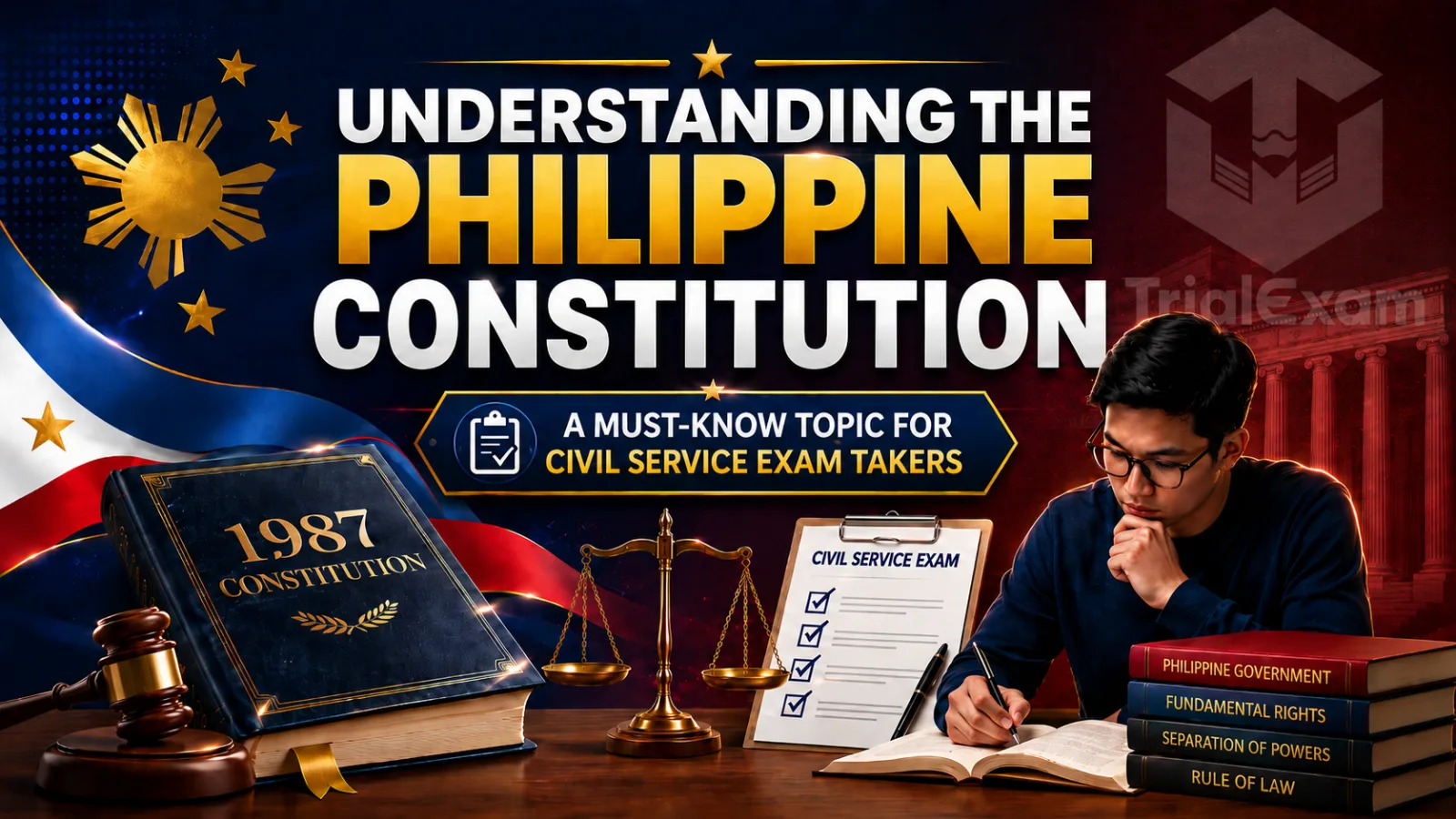
The Philippine Constitution is one of the most important topics in the Civil Service Exam. Learn the key principles, branches of government, Bill of Rights, and Constitutional Commissions that every CSE taker should understand to boost their chances of passing the exam.
The Philippine Constitution is often called the "Supreme Law of the Land," and for good reason. It serves as the foundation of our government, defines the rights of citizens, and establishes the powers and limitations of public officials. For Civil Service Exam (CSE) takers, understanding the Constitution is not only important for passing the exam but also for becoming informed and responsible citizens.What Is the Philippine Constitution?The Constitution is a written document that outlines how the government operates and protects the rights and freedoms of the Filipino people. No law, policy, or government action can go against the Constitution.The Philippines is currently governed by the 1987 Constitution, which took effect on February 2, 1987, following its ratification by the Filipino people.Why Is the Constitution Important?The Constitution serves several key purposes:✅ Establishes the structure of the government✅ Defines the powers and responsibilities of public officials✅ Protects the rights and freedoms of citizens✅ Ensures checks and balances among government branches✅ Upholds democracy and the rule of lawWithout the Constitution, there would be no clear limits on government power and no guaranteed protection of individual rights.The Three Branches of GovernmentOne of the most commonly tested Constitutional concepts in the Civil Service Exam is the separation of powers.1. Executive BranchHeaded by the President, the Executive Branch is responsible for enforcing laws.Examples:PresidentVice PresidentCabinet Secretaries2. Legislative BranchResponsible for creating laws.Composed of:Senate (24 Senators)House of Representatives3. Judicial BranchResponsible for interpreting laws and resolving disputes.Headed by:Supreme CourtQuick Memory TipExecutive = EnforcesLegislative = CreatesJudicial = InterpretsThe Bill of RightsThe Bill of Rights is found in Article III of the Constitution and guarantees fundamental rights and freedoms to every Filipino.Some important rights include:Freedom of speechFreedom of religionFreedom of the pressRight to due processRight against unreasonable searches and seizuresRight to equal protection of the lawsSample CSE QuestionWhich Constitutional provision protects an individual's freedom to express opinions without government interference?A. Separation of PowersB. Due Process ClauseC. Freedom of SpeechD. Equal Protection ClauseAnswer: C. Freedom of SpeechConstitutional CommissionsThe Constitution created three independent Constitutional Commissions to ensure accountability in government:Civil Service Commission (CSC)Responsible for overseeing the civil service and ensuring merit-based government employment.Commission on Elections (COMELEC)Administers and supervises elections.Commission on Audit (COA)Examines and audits government funds and expenditures.Easy MnemonicCSC = Civil ServiceCOMELEC = ElectionsCOA = AuditFundamental Principles Every CSE Taker Should RememberThe Philippines is a Democratic and Republican StateThis means sovereignty resides in the people, and all government authority comes from them.Public Office Is a Public TrustGovernment employees and officials must serve the people with responsibility, integrity, loyalty, and efficiency.Separation of Church and StateThe Constitution prohibits the establishment of a state religion while protecting religious freedom.Common Constitution Topics in the Civil Service ExamReview these areas carefully:Bill of RightsBranches of GovernmentConstitutional CommissionsDuties and Responsibilities of Public OfficialsCitizenshipSuffrage (Right to Vote)Accountability of Public OfficersNational TerritoryFundamental State Principles and PoliciesFinal ThoughtsThe Philippine Constitution is more than just a subject to memorize for the Civil Service Exam. It is the framework that guides our nation and protects the rights of every Filipino. A solid understanding of its principles can help you answer exam questions with confidence while also making you a more informed citizen and future public servant.As you prepare for the Civil Service Exam, make Constitutional Law one of your study priorities. Many questions can be answered correctly simply by understanding the basic principles and values enshrined in the Constitution.Study smarter, not harder. Focus on understanding the concepts instead of memorizing every article and section. Once you understand the principles behind the Constitution, recalling the correct answers becomes much easier.
Sign up for our newsletter
Get study tips, exam guides, and Civil Service updates straight to your inbox.
Ready to pass the Civil Service Exam?
Start your FREE Full Access — thousands of exam-style questions, timed mock exams, and analytics that show you exactly what to review.
Start Free Access